Quayside Keeps

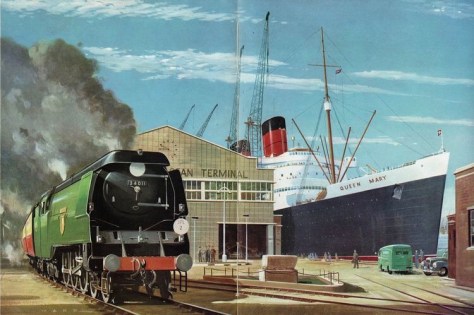
Such a quiet bird, she thought and then a sky song spiralled out. And it sang as though it always had time for feathers, as though this was its home. And she saw herself, ship high and blown, above the docks on rising waves and it was here, next the creaking beasts up top and with blustered hair, that she grew. 

Here, that her sense of wings exploded to the seas, it was here and always would be. Down underneath its hulk, by the menshouts and leaden ropes there would be bicycle wheels. On pavements grey there would be spokes turning rubber, metal rubbing, gears changing and younger than her, his speckled legs would be pushing on the pedals that she couldn’t see. 

And there he was, escaped and expanded, exploring the docks by himself. Whiteout at his side, slabsteel towering high and he looked up. Painted letters sang out her name and he was there, adrenaline pumping, muscles aching, boundless and new on his bike.

And he grinned, up and up, to the top of ship, he squinted in the light, hair with a single curl at the front that zinged up like hope, like irrepressible joy and he was young. 

She looked down, wings nestling in her back, thin greying hair, a testament to travel and as grunts of men hauled ropes and chains released her, she swayed towards him. 

He paused on his bike, so young and persistent, with a button bright mind, sabatier sharp, the boy who took her hand across the years and from the quayside his story burbled into hers, in the churn and spume, in the chaos of waves, his eyes locked onto hers, always and he freed her. 

Wings ruffled bright, as her daysong followed the clouds, she saw him, and because of him  a boy on a bike, she flew.


Meditations, maybe.

She was the taste of bergamot in her scalding hot tea and just to her right and upwards, she was the fragile bloom of rose. Today her choice was the sweetest of pink white, a hint of colour, subtle, almost there, just like herself. And she was raindrops on her window. Of course. She was always the rain. 

She had bought the flowers herself, like she did, like she does and now it was nearly time to leave, to take herself to the town, then the river, to see if the ripples would show her proof that she was there.

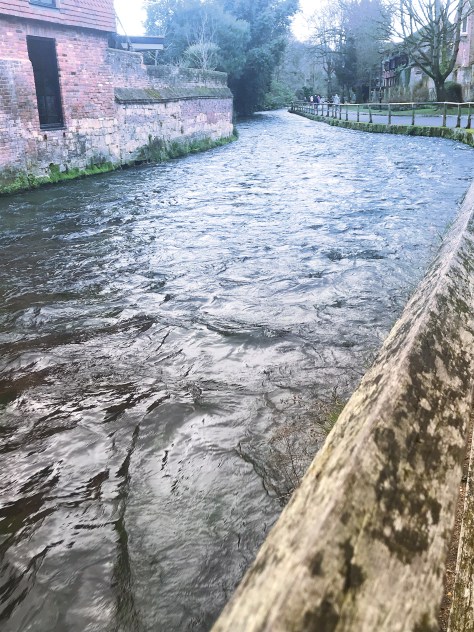
And then she was there, warmwrappedcold, coldwrappedwarm and the fast running water burbled past her. Traffic was a memory and she sat. The winter breeze ran down her cheeks, hair blew across her nose and she was still. Almost.

River dreaming, detritus swirling, licking up the rocks and cobbles underneath. And she was the moss under her feet and the sound of footsteps through the years and down the path.  And all she needed was the padding of hard chewed paws to come and sit beside her. 

Couples walked by, dog free with navy bags and comfortable ways, chattering and she was quiet and water gurgled in her stationary world. And nattering young parents, buggy shoving and a man just by himself and she was there. 

Waiting for it to pour, waiting for the sky to peel and soak her to the marrow on her bench. Waiting for the force of water to carry her far away.

And so, she sat.

Cold under grey skies, constant as the sun masked by her clouds. Necessary as the atoms in the water that held tight onto her name. Contingent as the day.

A distant bus pulled her attention to the left and lifted her up, traffic and people and days and birdsong. Places to go and to be.

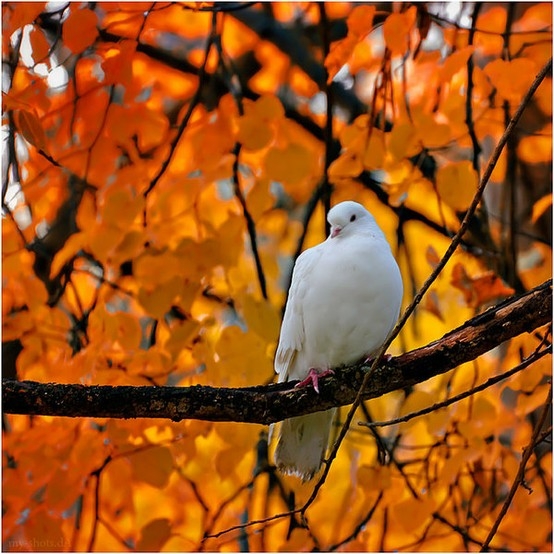
The blackbird, sharp yellow beak across the slate, held out its wing to her and called her home.

And it was always this way, motionless movement, nothing stops for her, not even herself.

And an elderly couple with sticks, tapped by and she was the gravel under her feet as she gathered up herself and went back home.

And so, it always would be.

A Rain Song Called Elegance

The rain moved in, like her eyes opening, like seeing the morning for the first time and it was welcomed, like that dawn, like the gratitude of the day, like eyes locked close and knowing, and it rained.

But it didn’t rain back then, it was quiet, warm, a thought nearing the end of summer and in the tail end of the season, the water rippled up the boats on the canal and their faces were reflected in its soft stroking waves.

And evening would have moved in, like it did, like it does, it drapes the coolness, the calm end of day, like an arm around her shoulder, like the footsteps by her side.

And evening drifted up, traffic sounds gave way to birds and she hitched up her skirts, like she did then, when white washed walls were unfamiliar, not the faded grain of now. And they sat.

Birds watched them then and she watches them from back here, folded in the now, in the smell of wet soil, the kiss of lavender scent and the certainty of August.

Time came with her, her companion on the way, tucked in the pocket of her skirt, vivid, like their moment, translucent, like the wings. And her wings beat out in the evening sky, strong, like the bonds that hold her, glorious, like their day.

August had returned and she could fly. A rainbow swaddled her garden and under its hue and shimmer, they were young. And under its song she was old but she had wings.

A Brief History of Us

In a park, somewhere in an old deep green and bristled wood, there was a car. It was an old car, corners had rust and the seats had seen better days but it still worked. And although the miles had built up on the clock, it still drove quite well, well enough to bring him to her door.

They sat in the car, her hair waving and him in the driving seat with his list of objectives and plans. They talked. They always talked and here in the car, near the car park at the swimming baths, they sat and talked about Stephen Hawking.

She didn’t have much time for scientists, not in those days and she listened to him chatter and enthuse. It all seemed so alien to her, so remote from her ways and her thoughts.

There in a park, far from where she was now, they would sit and think about knowledge, argue over the unknowable and as lunchtime turned towards afternoon, she promised to read the book.

A Brief History of Time became their bible and on distant settees far from his, she made notes and she frowned at the pages. And as weeks became months and strangeness seeped into familiarity, she found her way.

Planets crept into her soul and atomic mass with all its inherent uncertainty became the conversations of a Sunday night. How odd it seemed that she grew to follow his ways, his words and yet now, leaning up the kitchen cupboard, how strange it was that there could have been any other way than this one.

This was the way and they knew it at a cellular level, and certainty was woven into every interaction and every dream.

And years later their son was on his way home, top deck, front seat of a double decker. And the trees brushed past the glass that held him and his college bag was heavy with unseen words.

She thought back to first of the parks and his old car and all the talking. There seemed to be no passage of time between now and who they were back then.

Stephen Hawking had bent the fabric of their spacetime and they rolled into each other with a permanece that was unknown to them, back there, back then in the car.

In the now, the bus with their child came nearer and she thought of the worlds that had changed. And in an echo of the car wheels turning was their son playing out all the maths, their boy calculating and rejoicing in calculus and if he could, he’d have sat in the back of the car in the past and shown his parents the workings out. There, on his pure white page was the algebra to the split screen experiment and equations for Schrödinger’s cat.

In a park, in a car many light years away from here they all sat, together. And they were unaware of this day unfolding as they read, as they talked, as they laughed.

A Certainty Like This

4847ed39092f1ef29720570f3b79718f
The hills came back, they wrapped around her like an old friend, like a mother’s arms and she was safe, more than that, she was free.
Iris folded herself into her coat, it was a heavy, twisted wool with a knitted corsage on the left lapel, chocolate brown and as warm as it looked. It would be alright, she insisted to herself.
The platform was cruel. It hollered, ripping bits off people, tearing steel and diesel smashed through air, but she didn’t mind. To be fair, she thought, nothing can get through to me now, nothing can scrape or stab me and she let the trains do their worst. Her hair was thrown upwards like a beacon, her coat billowed out behind, filling her form until she swelled, bigger than her shape, her smallness hidden from the world and then she stepped.

Iris climbed onto the 10:17 to Wolverhampton.

Familiar towns whipped and passed. She watched reflections of people staring into laptops, intent on their day as she gripped the seat beneath her, scrubbed the nap backwards and forwards in her small hand. Yes, she was still there.
And changing for another train she felt the air she needed getting nearer and on and up through cities she used to know, places they’d visited when cars were hired and journeys made. Now it was a screech of a platform and cold strangers looking in beyond her, searching out seats by her side.
Tiredness pulled her down through another change of station and she wondered about her sanity, whether she’d really left home at all and if she had, what would she do when she got there?
She dozed. The weight of the hours closed her eyelids and the rocking of the carriage carried her away. She saw mountains and pine trees, how they framed themselves in one moment. The stream was drawn down through the image like a child’s artwork and it jumbled and glinted over rocks. She was there in the old train. Their train, warmed and wrapped from the Alps, stuffed full of chocolate and memories. The bowl of baked cream, the wicker chickens and the sky. How clear it had been, how far away but its light lit their rooms and their beginnings.

The train shook her awake into the sunlight dropping shadows, streaming out across the land. Iris blinked herself back into the afternoon, ordered a black coffee because she could and sat, mug hugging as she closed in nearer to her old town.

***

And morning came. Morning, after her tired trudge to the B and B, daylight after the restlessness of lumpen foam, of unfamiliar sounds and scented sheets. But morning came as it did back then, when they slept in spontaneous rooms, when owners smiled and gave them a key to the room on the left of the landing and they were there. It wasn’t just the mountain air that filled her lungs, that sparkled her eyes, it was the touch of herself, it was the sound of her laughter and in narrow streets with no plans, they ran.

Iris walked up alleyways, she walked taller than she was, like a bride to an unseen alter, she traced her steps. And there in the light rolling up the mountains, there in the air that she recalled, she found the pub. She pushed the heavy door and turned left by the coat stand and there she was.
Her hair was dark, long across her shoulders, her fleece jacket, the colour of her cheeks and she looked up. She didn’t see Iris, of course because she was laughing with her boyfriend. His back was towards her so Iris couldn’t see his face but she knew it well. She knew every curve and every furrow and she watched. They pushed the plates to one side, knocked back the remains of their drinks and said ‘let’s go.’
There, on an unplanned adventure with few clothes to their names, there, just north of his mother’s home where they’d travelled to because they could, they laughed and they sneaked out. They left the pub without paying, just once – only once because the staff were unresponsive and they, themselves were young. They were away together for one of the first times and they could run.
He took her hand and they walked straight through Iris standing at the door and how they ran, laughing like children down the cobbled lane until they stopped just beyond her sight, bent double and caught their breath.

Iris left the pub, she followed their trail and held them again in the distance. The girl looked back, saw Iris and stopped. She stood there in the crisp clarity of the mountains, she stretched up tall and wide and flung her arms to the sky. There, in a place Iris remembered, there, with him by her side. The girl squealed out, head back eyes tearing, lungs full and she was free. He photographed her and Dear God, she was so free.

Iris ran, she charged towards the girl and the girl knew. She opened wide her arms and called her home.
It’s alright,’ she whispered as Iris sobbed on her shoulder. The girl took her hand and showed her and there in the mountains with the light falling on her greying hair, Iris reached up. She threw her arms up to the clouds and called out his name.
She pulled the air around her, the sense of him, their purpose and how she’d grown. Iris in the mountains, arms wide in celebration of her form. It was yesterday, it was always there. And it was now and freedom was her name.

Lake District 1

Under The Circles Falling

She past a new build on the left and brushed against its huge star in the window. She remembered when the trees were there, when animals hid and insects crept in the hollows of branches that had now gone.

Something about the star gave her hope, gave her a lilt, a swell of a young girl’s life and of family filling the rooms.

And she past by. The sky was swollen, saturated with an end of year rain, with a harsh rain that sliced at pavements, that peeled away the last of the year. And in her mind she was younger, she was hope filled like the fields around her. She was surprised by its sudden lush greenness, like the woman she used to be waving to her from back then.

And back then she was packed, a small bag just for one night and they would stay in the hotel that they loved. She was there in the bright white bathroom, hair curled and velvet dress. It clung to the curve of her belly, to the secret kept inside. And when the time came she would tell him, she would sit on the bed and smile. In fact she glowed, she sparkled and trembled as though she were made of the stars themselves and they laughed. After all their moments this one was the purest, the connection and the gift frozen in time, in the warmth of her hand and his lopsided grin – they were there.

She was back in the unfolding of the night, clicking up the high street in her heels. And with flat black pumps for the journey back down, they walked to the restaurant for the meal. Sometimes now when she past by the same place, huddled at the back of a bus, she would look left to the cream tiled floor and remember the DJ in the corner and the song played just for them.

She was there. Dear God, she was there and right now as she bumped along a wet road in the present, she was back there, beaming, like her soul would fly, bursting from her side.

And later she slipped into the flat shoes as they wandered back down town, to the call of the Cathedral bells. How still the night seemed, yet how full of an energy that she could taste. It bristled around them in the gentle rain, before they made phone calls, before their new journey began.

She was there, at the end of the century, slipping into the new day, softened into it like his hand in hers, as though woven into the time. And always, despite the hours, they would be there. It was their moment, in the darkness, smiling under screeching fireworks, white stars just for them.

For the Waiting 

It was silent apart from the ticking of her clock, apart from the ringing in her ears. And in the garden, the edge of Autumn had begun. It crept in on the warmth of the leaves, in the morning sunlight making shadows on the wood. The door to the summerhouse was still open and in the reflection in its windows was the light pushing through her trees, there was a liquid ripple of her home and she was still.
Inside the summerhouse it was quiet, apart from the tick of insect legs, apart from the spinning of webs. Leaves blew in, some crinkled, some dried and dust strings hung over the stiffened window frame. 
It was nearly Autumn, it was silent apart from the tweeping of birds, apart from the twinkled blue sky. The clouds embraced her to the right, brief fluffles and whisps and they whispered. 

It was silent apart from the voices in her head, apart from the trundle of wheels. And as she watched the quiet growing of the weeds up through her patio, she heard people talking low, calling to her, reassuring her and they held her hand as breathed out. Long, deep hope filled air escaped her mouth, as she pulsed, as she pushed. And when evening came she was lying still, watching the ceilings move and everyone wore green. She thought, green like the garden we’ll play in, green like trees that protect our home.

And in the silence of the morning when the tick of the clock knew her name, she listened to her garden, to the warbling throats of the birds and far away the voices called her and from far away they came close.  

Up to her, next to her, beating up and out of her and she lay and tears fell down as they worked at her side. It was green out in her garden, it was on the edge of turning warm.
It was green in her mind as the faces smiled and focussed and looked down. 

It was so quiet. It was silent in her home, apart from the sweetness of birds, apart from the waving of leaves and she opened her eyes as they rummaged inside her. 

‘Do you want to see your baby now?’ they called and she blinked wide, and cried as he was lifted up from her, pink and red and new and there was no silence. There was the sound of lungs filling with air, of his first cry blurring with her own. And they were there, together new and safe, his warmth like the comfort of Autumn, his skin like the softness of hope and she looked up.

It was silent apart from the ticking of the clock, apart from the ringing in her ears. The sun had moved up the summer house, the colours deepened, the memories rich and fresh amongst the fallen leaves.
It was morning on the edge of Autumn and she was wrapped in silence and the weight of him, new in her arms.

It was silent apart from the calling of pigeons. The sunlight lit their breasts and they flew off. It was almost Autumn and she was swaddled in the day, in the moments. She held him warm up to her cheek and they were young.


This Woman’s Work

She listened to his breath and watched his hands, they were resting in folded arms across his face and she thought of them fresh from birth, grabbing onto her thumb, wrapping themselves around her finger. And then hot and small as they fumbled with bright bricks on the floor. 

There were hours when she held them on the walks to school, past their familiar way points, the big brick wall and the Spelling Hill, the Opening Trees and then the gates and they held pens. The hands she looked at now, that gripped the pencils, that formed the words, that scribbled and drew mazes then shaped sentences across their days, were the hands in the final playground when they swung from monkey bars, one determined grasp after another, pulling himself along before they left, before the photos at the gate and they left. 

She remembered his hand as it clutched hers, as they sat heads down on the pews, in darkness when the light was sucked out of their world. And how she held tight, how she clung firm to him and him to her as they stumbled forward in an unstable new world and then they looked up. 

To his hands, bigger, lifting heavy bags of books and different walks without her and he grew. He grew in ways and wisdom, in taking on his world and subjects came and subjects went, fingers folded around revision pens, shoving through hair as he leant over exam papers and he thought. His mind whirring and whirling, making links, his fingers fiddling as he waited for results.

And now autumn wakes them up again, to rain washed lanes and leaves. And now the road rushes underneath him as his new day comes into view.  Hands in pockets and a bag full of tricks, the compasses he holds now, he guides now, the calculations that he makes and his hands are strong and firm as they press buttons and follow the sines. Manipulating co-sines and tan in ways she cannot understand and she watches him go striding, preparing with a fistful of ideas, with complex numbers at his fingertips and behind him go the toddlers and the children he used to be, skipping, running in his steps and the hands she used to hold, wave to her and she counts every moment as he plots out his next phase.

How the hours have wrapped around us, she thinks, her baby, their boy and  their joy. And as the sun warms pavements and rain drops lift themselves up from the ground, the man he is becoming makes his way back home.

For The Ravens’ Song


4eac07e60037819937d8e357b11bf18d

Ruby liked to dance, she liked to wear layers of skirts and things that jingled and she spun herself around. And if it was a Friday she would sing. Fridays were the days when she went into town and she allowed herself the luxury of visiting the Tiffin Tea Rooms. How the owner Mrs. Joyce would crinkle up her face when she came in and she’d sit by the window near the plastic flowers and stare out. Mrs. Joyce would bring the teapot over, always assam and ginger and a slice of sticky marmalade roll.

‘So, thank the good Lord for a Friday,’ she would say and wolf it down. The butchers would save her a rabbit and it lay on the slab out the back, by her string of sausages, plump and pink parceled up in greaseproof paper.

‘I’ve saved you a titbit,’ grinned Mr. Jarvis and she took it from his blood-stained hands.

‘See you next week,’ he called out as she left the stench of carcasses behind her. But it was Friday so she allowed herself to buy the wine, nothing too fancy, you understand, just something smooth with plum based notes, to sand down the edges of her day.

The Morris dancing had been going well, she’d joined the group when Angie in the Post Office pointed to the advert in the window just above,

Honda mower, runs well offers over £90.

‘You show ‘em, Girl,’ her Mother used to say, and she did. She danced as a child, she danced around her wedding bed and there, in the town square despite the pain in her back and the corns on her feet, she stomped and swayed and she beamed from the side-lines as her new friends mashed up the ground. Of course, the cramps came late at night, in her shins, after the hours of skipping but she was determined to do it.

I will do whatever it takes, she thought to herself, to be that dancer, I have to let this rhythm out. Her costume glinted and shone, made with care over months as she sat at her old singer sewing machine. Her Grandmother had left it to her and despite its age and outdated mechanisms, it purred and joined the rag-taggles of fabric to each other. She coated her hitting-stick in tar, till the smell of bitumen made her eyes water and before it dried out she rolled it in plastic jewels from her childhood jewellery box.

She remembered her friend, Lyn, whose new heart necklace had knotted up on itself and how she’d sat on the bed in her bedroom, picking at the chain with her slender fingers. She spent ages on it while Lyn came and went and bought cake in that her Mother had baked in the afternoon. Ginger cake, almost too spicy and when the knots gave way to her fingers, she ate the cake and Lyn cried. She thanked her and hugged her and told her they would be friends forever, but they weren’t.

The jewels burned out of the blackness like fragments of hope and she twirled it in her hands and the costume ruffled as she climbed inside and hid away under the headdress. She had constructed it from her favourite hairband with a tangled mess of wool and wire, feathers thrown in, here and there, ones she’d bought from the craft shop by the river but mostly the ones from the park, on her walks, where she pinched them up from the earth or found them under bushes and she brushed the soil from their softness and combed them back into shape when she got home.

She felt such a power in her costume, as though all the times in her life when she’d felt fragile and broken, were just a dream, an aberration from the girl she used to be. And here in her kitchen, by the warming pot of stew, under the rosemary hanging up high, she felt so strange. And the strangeness took her by the hand to the mirror and the strangeness showed her her face, feathered and free, released from the old form as she nodded away to herself.

‘This will do fine, my dears,’ she said to her ornaments and cages of stuffed animals. Ruby ruffled her feathers, she opened the front door and sniffed the fresh air.

‘My dears, I do believe it’s time,’ and she climbed her spiral stone staircase in the corner of her lounge. The wall was cold like it always had been, the lumps of raw stone jutted out and she stroked them with her long fingers as she made her way upstairs. In the bedroom, her cheval mirror smiled back at her by her walnut dressing table with silver topped perfume bottles and photos of her cats. The once white lace doilies had turned to cream but their patterns were so intricate and in each thread, she heard a bird song, a calling from a distant beak and she glanced at them. It had been years since she used to iron them on a Sunday morning, to spruce up her room for the week but when she did, when the windows were open and the crows made themselves known, she would count. Ruby counted the threads that made the snowflake pattern and the picot edge framed the central star shape with nine tiny flowers.

Counting always helped to calm her down but she didn’t need to count today because now she had her feathers. She shuffled towards the arched window that flooded her small room with light. The window had been her reason for buying the property 48 years ago, how it filled her with joy, how even then it felt like a doorway to another world. She would sit for hours watching the sparrows hop from branch to branch as she made lace, as her fingers blurred the shuttle to and fro.

She stood in front of the window, shook her shoulders, making her feathers fluffle and shimmer and she was ready.

‘You know, my dears,’ she said to a room full of memories, to the ornaments and photos from her life.

‘You know, I am finally able to sing.’ She stepped forward, her white hands took the wrought iron handles of her windows and she pushed them down. They resisted, stiff with age and then gave in. The panes quivered as she forced them wide filling her bedroom with the smell of the countryside, with the thick scent of sheep and distant hum of traffic. Her garden had never looked so beautiful, the lupins swayed, the hollyhocks swirled like a bride on her first dance and the snowdrops turned their faces to the sun.

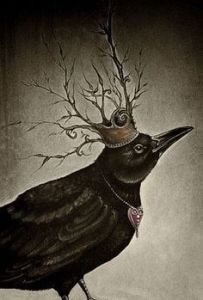
Ruby took a long deep breath, filled her lungs with hope and clambered onto the windowsill. She opened wide her arms, her wings rumbled and creaked and then she jumped.

‘I’m coming, my dears,’ she called and opened wide her beak, joyous notes spiralled out as flew up into the warm summer sun.
19376e2b38ee5d3a22f839706151777e


A Nuestra Aventura

56224695317439051lcxpduzzc

There goes the sunlight doing its thing, showing me that its still there.  It catches the web from last night’s work outside my window. If I concentrate hard I can see the rainbows in it and beyond the neighbour’s lawn, almost lime in its rays and I imagine how warm the grass must feel.

Since I’ve been sitting here, the shadow has moved up my curtain, it seems so drab now as though the hope that the sun bought has been stripped away to nothing. The walls creak and how a new day is pushing into me and if I don’t move from this spot, the planet will still spin. Even in my stillest form I know my heart pumps blood around my veins, that neurons jump the gaps to make these thoughts and cells renew and die. Its irresistible, a movement despite myself and I wait for the minutes as though there’s something coming, someone coming who will lift me from this place and if I hold out and breathe light small breathes that they will find me, like a crushed flower under foot or the scuttle of a lady bug released from a damp cold stone.

And far away in a place untainted by this morning, I am there. I am dressed in purple and my hair, thicker and darker than now whips and tears around my face in the morning bluster. I am up high and all I can see is the sunlight glinting off the waves and a horizon cluttered with boats. And there was laughter, reverberating in my head, bouncing sound waves around my ears and the anticipate of the moments ahead made me giddy with light and with joy.

My god we were filled with such joy.

***

And a pigeon comes to rest on the car, it pecks and slides down the windscreen, startles itself and flies off again. Today there’s autumn outside, clouds that could carry me far, take me away to Nice, to Cannes where the white sand would seep into my trainers. I’d stand by Matisse’s house and wonder what it would have been like to live there. To get up and paint in that light and the market stalls would be full of fresh loaves and the nectarines would compete with lemons and we’d walk, arm in arm, down cobbled lanes, looking out to where the sea became the sky and then I’d paint. After breakfast, I’d look east and on my dried-out primer I would sketch. I’d use charcoal and notice the boats that bobbed and buffered, there in a light that I remember now, I’d push oil around in swirls, cadmium lemon and scarlet lake up to the edge and no more.

I’d throw the bread crumbs through my window into a warmth welcome of air and pigeons would scuttle and drop down for my gifts out there, back there and not here, there in my South of France on a morning that isn’t this one. Here in the autumn beyond this rain stained glass, by the late wasp that nuzzles at brick and the pigeons peck at the roof of the car, they hop nearer now and look me in the eye. They’re close today, it’s October and they seem to know my name.

And then, there we were, further around the coast, under an untroubled sky, in the back of a cab, to old streets. We wandered lost, we held tight and asked questions.  The sun glared and lit the way as you paused with Guinness while I took our boy’s hand and we explored. Imagine that, far away from this world now, by the fountain that spat out our names and we were there. I wore the cream hat with petals on my tunic and we grinned, young and free into my lens.

That sun which lights the green glass on my windowsill, that burns up hydrogen while I think, is the sun that lit our faces on that day, in those moments that I fold around me now. And I can see the shopkeeper where I bought the sweets for our boy and you were there, sat waiting. We found the bus, we found the docks and the wind whipped around our hair. Then not now, there not here, under Valencian skies.

9ad0a7b410fc33f46fac37f19d6af730