If I could say anything to her, I’d tell her to still wear the Mary-Jane’s, they suited her. Their implied sweetness that belied her strength. In any case she’d never believe the steps she’d take beyond the pub in Wooten Wawen even if I told her.
And yes, the bells jingled on her skirt, noting how their sound hangs in the air, looping around, even now and what is it about the black and white Indian cotton that always comes to mind? Is it the waft against her legs, is it the foreshadowing of the woman in the making? Yes probably.
And if I could take her hand and tell her to choose a different skirt, one with less sense of contrast, would she? I doubt it. Did she buy that skirt and wear it because she had to, because she would think about it now, now when the black and white contrasts had become her life?
She would always choose that skirt and in an August car park it would billow out in the scented summer night. Billow out, like the curve of a balloon in a hot Summer sky. But then, you knew that didn’t you?
If I could say anything to her, I’d say don’t worry. Just wear the shoes, you’ll be alright. Believe me. And she does.
It’s something about the sight of her son running down the hallway in their new home while his t-shirt, bright white, reflects the young curves of his face. And all the train tracks he will lay are taking shape in his mind, in all the spaces where he’ll grow and play as though the brightness of his t-shirt, of the day itself, will never fade and even if it did, they would survive.
It’s something about the possibilities of the layouts that he’ll make, finding links as he crawls around. And she’ll do the voices as she sits with him, as he scuffs his knees and laughs at the trains.
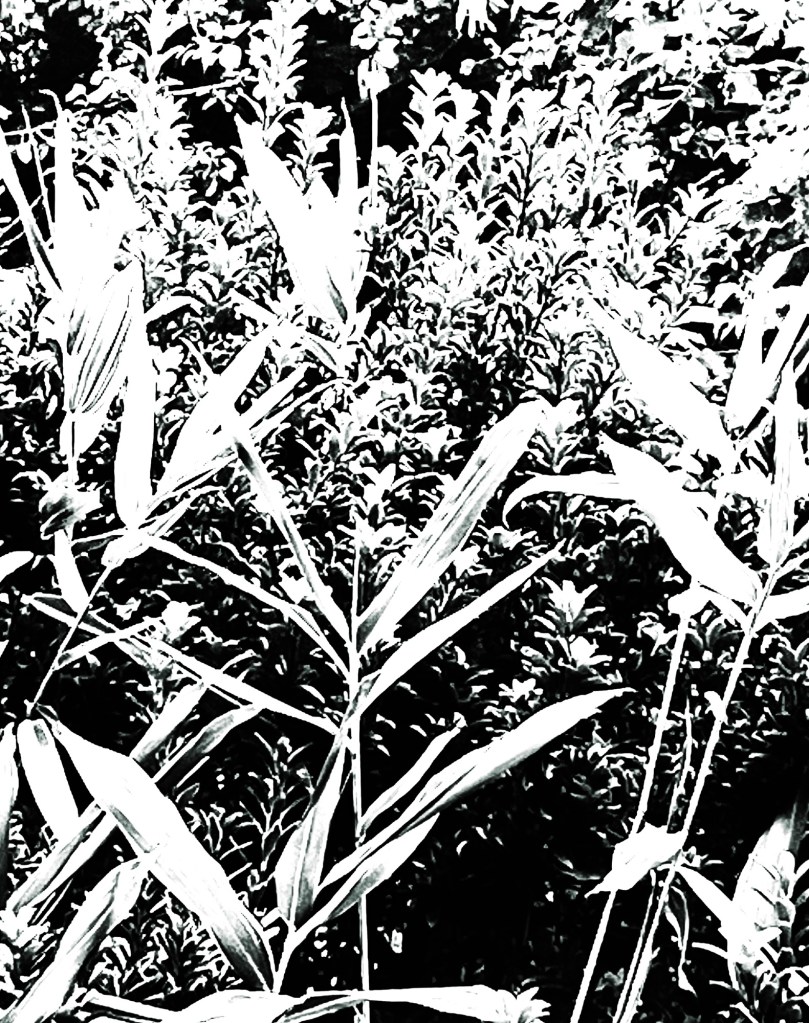
And outside now it’s something about the relentless sunlight on the spears of bamboo that need chopping down, the places where time wouldn’t stop. And every leaf waves at her like the rippled pages of a memory book, photos flipping past her face, brushing her cheeks from when the garden was primed for adventures and her son beamed as he burst through the door.
The hallway. Four o’clock. And he gave it a ‘ten thumbs up.’
It’s something about the chaos of packing boxes and the vibrant verve of a new start. That. His face. The loud tearing of gaffer tape and starting out again.
Seconds tick down at crossings, marking time and if you take the time to look after a stranger’s baby while their mother collects some food, then take a moment, the only moment that you have, to hold the infant in your eyes, to wish him love and health.
Take a breath amongst the hubbub and the clamouring to pray his life goes well, that circumstances hold him and that years from now he’s not spotted sitting in a doorway with a tin can of cash by his cold feet, irrelevant to passersby who jostle for position, who want the next Must Have.
And while seconds tick down at crossings you try not to fall into the cracks between the paving stones, the concrete where your mother’s feet brushed years ago, her cashmere cardi fluttering in quieter streets. And if you fell would some hand reach down to pull you up, would someone come to save you? Would a stranger wipe smeared blood and debris from your cheeks? Would they hold you?
And your mother’s feet blur into your own. You don’t fall down while the seconds tick to nothing and as diesel fumes mingle with chips and grease, the baby waggles his feet in the pushchair, sucking on the saccharin of a sweet Fruit-Shoot. His mother returns and thanks you. His life is good. You pray it always will be.
Under the trees where you shield from rain, a raggle-taggle group set up their tables, you leave before their purpose becomes clear. Your chips are warm in the cold, a fleeting comfort while your mother echoes around you, her pearls glinting from a younger sun that tries to push through now, that tries to warm you.
Following myself along is sometimes confusing. I do get lost at times. I start out down by the river by the ancient bridge. I wonder how I’m connected to the woman in the photo from 1905, with her skirt brushing the pavements. I jump-cut, I fly.
But I know how I’m connected to the woman in 1962, sipping strong tea, exhausted and her brand new warm pink baby has a heavy head, it makes her arm ache, her thin arms that would entangle mine on-top of Pendle Hill, years later. You know the hill? That hill, her arms, that baby, this life.
You know how it goes. So I keep following myself. The river flows over rocks, timeless. There are words in the river. I wander by waters. Fluid.
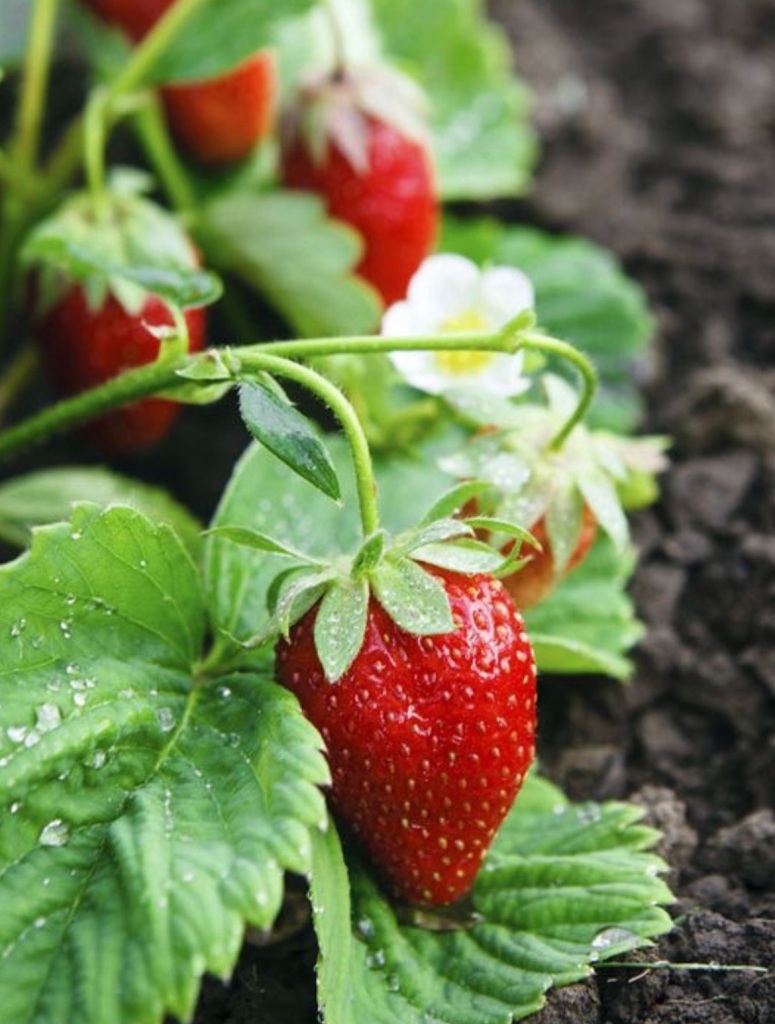
She would wear strawberry like tomorrow’s moon and watch it rise, silent in her orbit. But not today. Today was about light and off to her left, her sky had no need for clouds, not even cirrus in her mind.
Her leaves would deal with the heat, like they always did and one day the rain would return but not now. Now it was about light bouncing off her retinas, wavelengths bringing mirrors to her world.
It was fine. Fine, in the sense of a sublime moment. Fine, in the serendipity of time. The light falling across everyone busying themselves with important tasks, while the third generation star raged hydrogen and helium around them, keeping them alive.
The star spitting fire, giving them this day to be busy in, to rush and worry when they could stop and look up, stop and feel the sun on their skin, when they could just stop and Be.
And she looks towards the mirror on their longest day and in the delirium of light she knows she can wear red again. Tomorrow, strawberry red like her rising moon still shining like their sun.
Sometimes it’s the smell of lilies and the look of them boxed on her kitchen floor. Sometimes it’s the fluster of silk on her wooden stairs, how people busy themselves around her as she sits.
Now and again it’s the smell of nail varnish, sharp and clean, almost fruity, cutting through her day. Quite often it’s the thought of her mug of tea to her right, going cold as women fuss. One kneels down and laces her boots while the other stands behind her and sticks clips into her hair.
She notes how the moments jump haphazard, back and forth. The barefoot giggling, the squealing down the phone line, the faces waiting as she rustles down the stairs and then the door.
Sometimes it’s the front door open wide, the look of April grass, sap-full of promise in the sunlight but always it’s the crisp smell of taffeta, the feel of it, the weight of it, the look of it around her form. And then the leaving.
Most times it’s the leaving and her ivory heels on the mat in the foot-well of the car. And everyone who wakes up on that morning, who passes them as they drive by, will notice her, will smile and wave and she will know that decades later, that she’ll recall their faces even though they’ll have forgotten her.
And then the stone path comes into view, her clipping and shuffling into the heavy hush, dust particles hanging in the air like prayers. And most times, in fact all of the time, it’s the haze of photons, marking seconds, as if to say they’re waiting, just like he was. Waiting as she smiles towards him, knowing. And she moves through in slow-mo silence to his side.
Again and again and again. With her shield of flowers.
Sometimes later, it’s the metal sound of the hotel fire escape, as they sneak their way back in, when the guests have waved them off, when the guests think they have gone. High heels and alcohol, such a potent combination but they still make it to their room.
And then the cathedral looms up out of sequence, permanent against drunk daffodils. She tilts, she swirls against the ancient backdrop, arms outstretched with wings of chiffon, secure against the stone, pearlescent in the rays.
In the evening yards of taffeta bunch up to make a bustle and she inhabits it as though it’s intrinsic to her form. Music frays, lights and faces twirl, handshakes, hugs and tiredness falls.
And it flips back to the waiting and then the moving out towards. Always. Moving forwards, always holding flowers, a beacon to light the way.
The waiting there, this waiting here with purpose, with belief and certainty. And this is how it was, how it is.
The cold stone in the cathedral and all I could see was the fabric to my left as she sat there. The golden swirls, maybe paisley, maybe African, I’ll never know.
And to the right of her ochre and viridian I sat quiet and tried to regain myself.
And she helped us when her language wasn’t ours, when our battered tourist phrase book didn’t work.
And I wonder if she ever thought of me years later, of the young woman who she helped, taken ill in the arms of Our Lady and did she remember the warm blanket of her words.
I did.
She sat with me in silence until the taxi came and in broken English, as we left, she blessed us with healthy children. And I was grateful for her words, her care, the sanctuary of her presence. And a year later in the healthiest of pregnancies, in my blooming, I was so thankful for her prayer.
With thanks to the woman whose face I never saw, who came to my rescue, who helped us when we needed it and I wonder what she’s doing now and I send her back a prayer.
And it makes me wonder what I’d say, if I could say all the things in my head, if I could give you all the images and moments, all the feelings, thoughts and words.
And if I could shape them, if I could form them out of the mist rolling in by your door, would you hold them, would you take them in your arms and keep them close?
I move as if unhindered by time, the mist rolls in, softening me, droplets of water around my words. And beyond the bustle, in the place that only we know, there is calm.
You know how this goes. We start with the bed sheets, I’d call them plum, or maybe more of a claret, too dark for my liking either way.
Tiny windows framing fields, an old phone box that works. White cotton blouse with pintucks, sunhat with a pale blue ribbon, of course
Park up by the toilets opposite Rick Stein’s. Every shop with large buckets of netted shells, so many little brittle housings for creatures long since gone. I study them, imagine who lived inside.
The sun tears through me.
Sunday comes, leaves bike tracks on the Camel trail, not mine though. I leave a trail through the cottage and look from windows. I’m too good at that.
Monday blurs to Tuesday. Tuesday with the thump of sand beneath my trainers, parka flapping, hair wild. Blustered running with my arms wide.
The sedimentary rocks still glinting in the photons like they did, like they do, like they will long after the atoms of keratin in my hair have gone back into the atmosphere.
The bin men are a day late but it’ll still be light when I manoeuvre the residue of the week down the path.
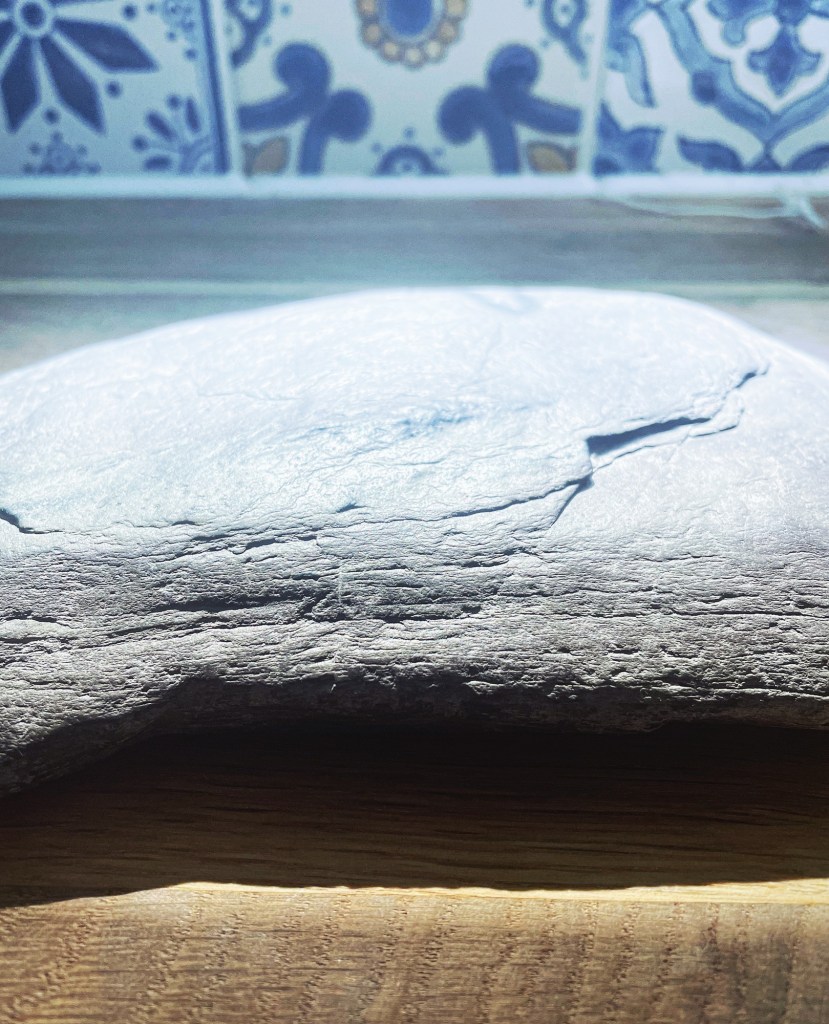
The crows are loud today, arguing over something. The sunlight edges towards the piece of rock on my windowsill, it’ll warm it up later. Hydrogen and helium just doing their thing, a bit like me.
Her mother’s best table cloth, the awkward smile over chicken salad or was it ham?
Churchyard trees smelt of Radox, pine crumbled in her hand.
Closed restaurant, tattered menu through the window reflecting them.
The lager soaked pub carpet, did she mention modern art, and lost her train of thought?
The Mason’s Arms, the slight hill by the Job Centre.
In Brueton Park the aviary was empty, a sense of space, of absence in the caged birdshit and lost feathers.
And from the bench the mowed grass, sap full, fell away from them like rolling years then stopped at the sudden gate.
Red t-shirt in the evening, pushing chicken round a ceramic bowl. Trying to be elegant. White cold stone, little Bistro walls, The Fat Cat in Solihull, it’s probably a nail bar now or tattoo parlour.
Later. The quiet house. The Fleur de Lys of her parent’s sofa. Running her finger over its edge.
The kettle boiled, she turned to him, she felt the kitchen cupboards up her back before she made the tea.
The chime of her parent’s mantelpiece clock, the weave on his fair isle jumper.
These things.
She dropped by to watch them as though it wasn’t decades ago.





 Janey L Foster